
July 26
57 miles
3500 feet elevation gain
Today was pretty cruisy. We slept in slightly later than usual, it was a cold clear morning with a lot of condensation inside the tent, so I put my new towel to good use and we let the sun dry everything a little more while we ate breakfast of danishes and coffee.

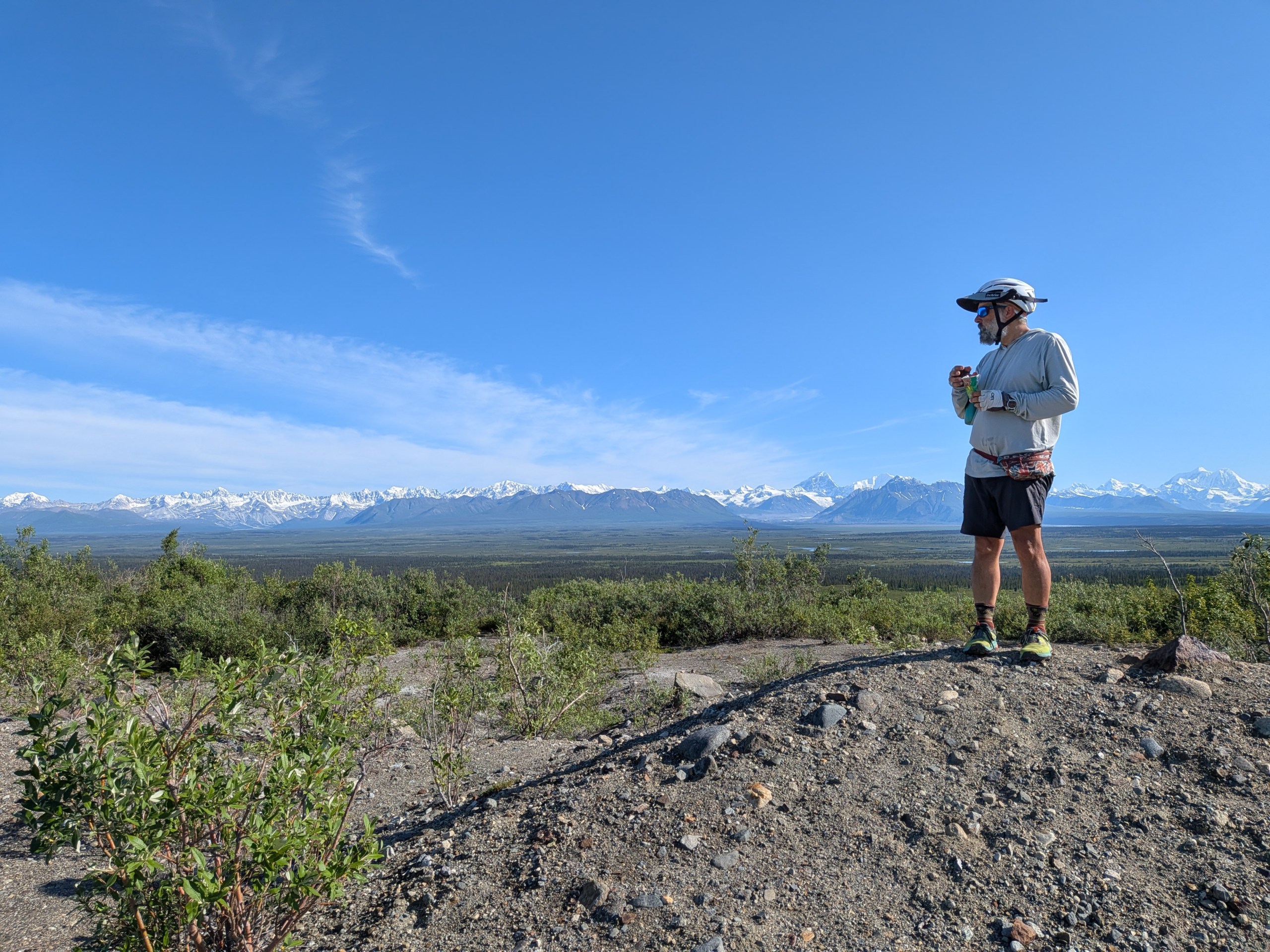
The views of the Alaska Range just got better and better. The climbs were short, the sun was shining, it was a great morning. Around mid day the climbs got a little longer and a little steeper, but as motivation started to wear thin we arrived at the Alpine Creek Lodge. We enjoyed a late lunch of sandwiches, french fries, and soda, and took advantage of the free coffee and wifi. The lodge was a cool place, they are open year round and offer everything from local artwork, furs that you can select to have a hat made, guided tours, on top of food, beer, rooms, and camping.
Feeling refreshed, we still had a few climbs to tackle but by late afternoon we were back into cruisy territory.

Before this trip, my Dad lent me a book called Mileposts, which gives detailed waypoints along every highway in Alaska, and I took notes on my phone for things I thought would be relevant. I’m glad I did, because I would not have known about the glacial history of the areas we rode through. Eskers are long, winding ridges of stratified sand and gravel, examples of which occur in glaciated and formerly glaciated regions. They are most often formed by the deposition of sediment at the bottom of ice-walled channels within or beneath a former glacier. As a glacier retreats, the channel walls melt while the accumulated sediment remains, slumping into ridges as the only remaining evidence of the former channel path. Kames and kettles are knobs and depressions formed by glacial activity. Eskers on Denali highway are considered some of the best in North America.

Additionally, I would not have known that the feature on a large lake we passed was a pingo: an earth-covered ice mound.

We also saw some new birds today. I’m not great with identifying female ducks but we saw some buffleheads, black scoters, and American wigeons. I also saw some trumpeter swans. There were a lot more ducks and gulls than that but I’m not great with gulls either. The most ubiquitous birds around here are the white crowned sparrows and redpolls, but there are also tons of Canada jays and dark eyed juncos, a bird that seems to live everywhere in this country but looks a little different depending on the region. And on occasion, we see groups of black billed magpies.
Which reminds me: on the Cassiar, when you get to Jade City, pick up two stickers for me and Brian. They were out when we were there. Thanks
Ok, that’s still about 500 miles south of where we are so you might need to remind me